
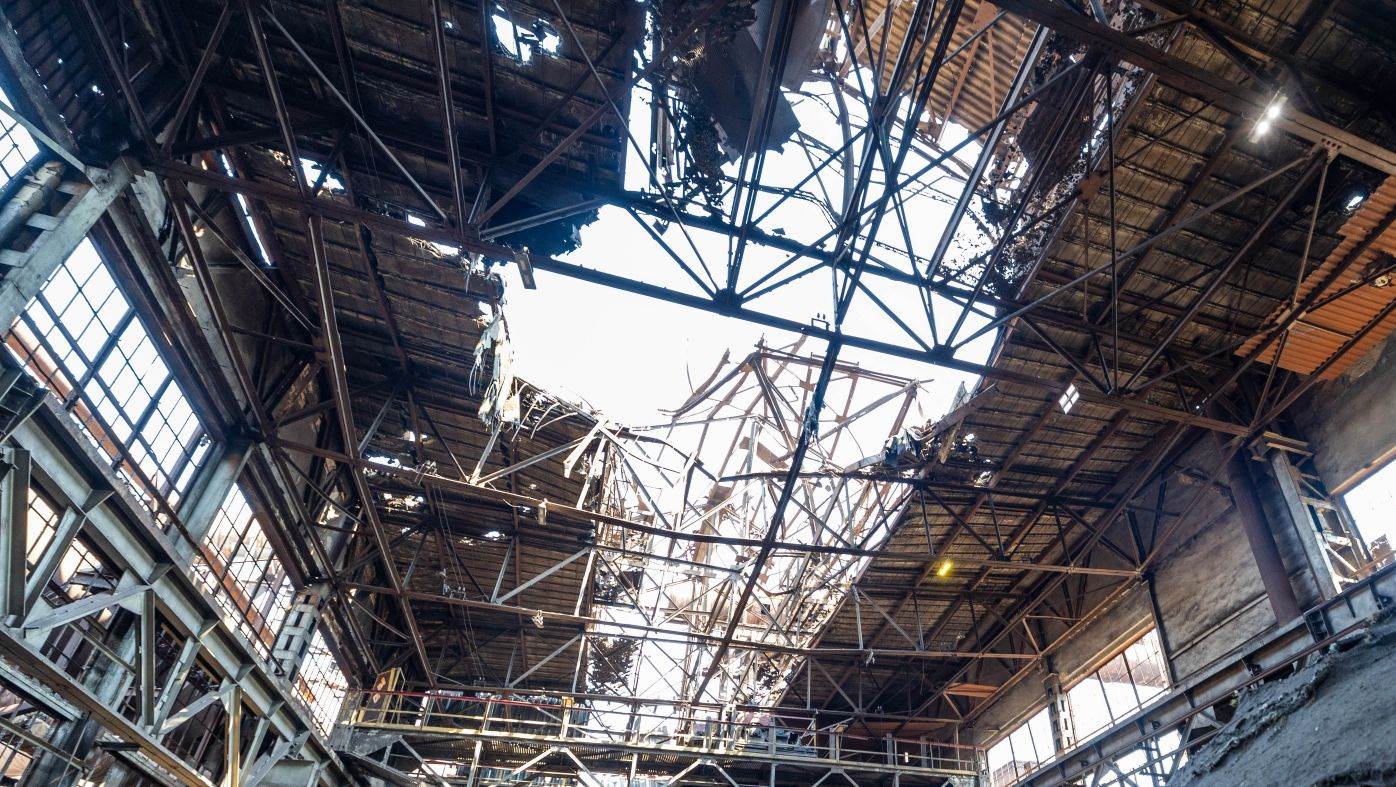
— Will you be able to resume operations at your plants?
Unfortunately, the steel industry has become a target of russian strikes in recent months. Metinvest’s facilities are not the only ones to have come under attack: ArcelorMittal in Kryvyi Rih and Interpipe in Dnipro have also been targeted. ArcelorMittal has already said that it cannot resume operations while the fighting continues. We are assessing the extent of the damage and looking at ways to repair our production facilities and restart operations. However, it is too early to give a firm timescale: the damage is extensive.
— How severely will this shutdown affect Ukraine’s economy?
Before the russian aggression started in 2014, the steel industry accounted for around 10% of Ukraine’s GDP and more than 30% of its exports. While many plants have been destroyed since then, despite these losses, the industry remained a mainstay of the economy until recently. This is a serious blow.
— Meanwhile, the EU has imposed restrictive quotas on imports of Ukrainian steel. What do you make of this?
This came as a very unwelcome surprise. The quotas introduced for Ukraine a few months ago mean a reduction of more than 60% in steel exports to the EU compared with last year. This is yet another factor adding to the pressure on the industry.
While we support the EU’s efforts to cut carbon emissions, Ukraine’s circumstances are being overlooked. We have been fighting for survival since 2022 and are not currently in a position to invest in decarbonisation. We had hoped that Brussels would give Ukraine more time to make this transition.
Moreover, the blockade of Black Sea ports prevents us from exporting our products to other markets. The EU market is therefore vital to us. Cutting quotas by more than 60% is another blow to Ukraine’s steel industry.
— Yet the EU continues to buy russian steel…
Yes, substantial volumes of russian steel are still entering the EU. While quotas on russian steel imports are gradually being reduced, a complete ban remains a long way off. It is a paradox: our allies are imposing restrictions on us, while our enemies continue to have access to the EU market.
— Isn’t it contradictory for the EU to harm Ukraine’s economy while people in the EU complain about the burden of supporting Ukraine?
Yes, that is precisely the contradiction in the EU’s current policy. On the one hand, we are grateful for the support. On the other, I find it hard to understand decisions that limit Ukraine’s ability to support itself and force us to ask for further assistance. It makes no sense.
— russia is trying to paralyse the country by attacking roads, petrol stations, railways, supermarkets and warehouses. How long can you continue to resist?
The EU is providing substantial assistance to Ukraine that is helping us to hold out. As long as the EU continues to support us, Ukraine will be able to keep resisting. At the same time, attacks on economic infrastructure are causing serious damage. To keep fighting, we need to make even greater efforts, with further support from our allies.
— Do you mean greater support for supply chains and manufacturing facilities, including those in the defence sector?
I am not an expert in military production, but I think so.
— Some EU aid to Ukraine has been held up in Brussels because its release is conditional on certain reforms. These include higher taxes on online purchases, even though people are already avoiding supermarkets because they have become unsafe. Does that make sense?
I understand that Ukraine needs to carry out certain reforms to unlock some EU assistance. Our political leaders are considering this issue. In the longer term, we will have to implement all the necessary reforms. But it is for them and their EU counterparts to decide whether this is the right time and the right approach. I am confident that Ukrainian politicians remain committed to pursuing EU membership and implementing reforms at the appropriate time. The question is whether now is that time.
— What do you mean?
Ukraine has already declared its intention to join the EU. The EU therefore needs a long-term strategy for Ukraine’s integration. We are ready to continue on the path towards EU integration. There is, however, one important caveat: while we cannot currently afford the substantial investments this process requires, we are prepared to make them in the future.