
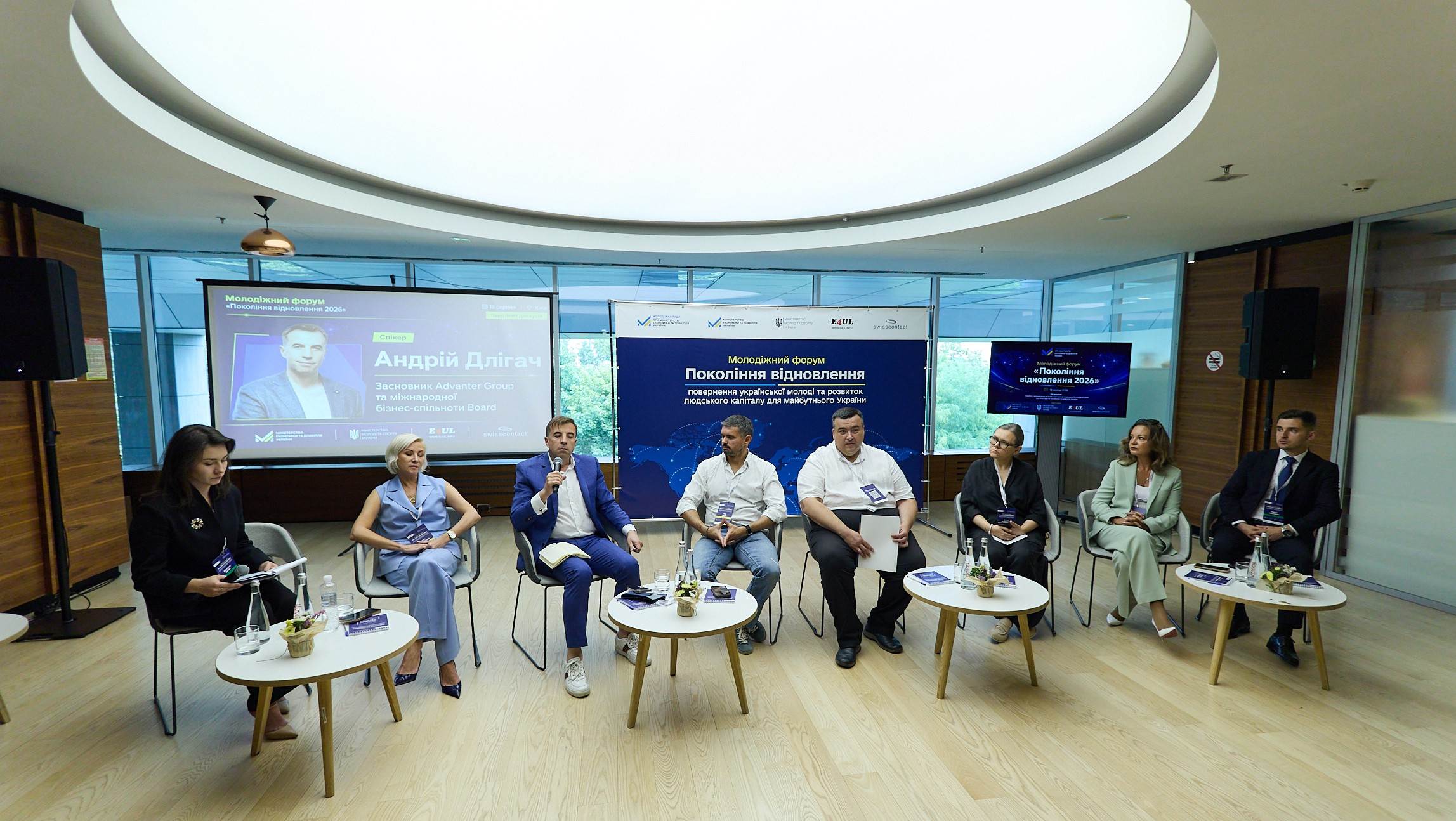
The event brought together representatives of government, business, international partners, the education sector and youth organisations. They discussed how to create the conditions needed to attract young Ukrainians and encourage those living abroad to return, helping to make young people a driving force behind Ukraine’s economic recovery. The event was organised by the Committee for International Relations, Partnerships and Cooperation of the Youth Council at Ukraine’s Ministry of Economy and Environment.
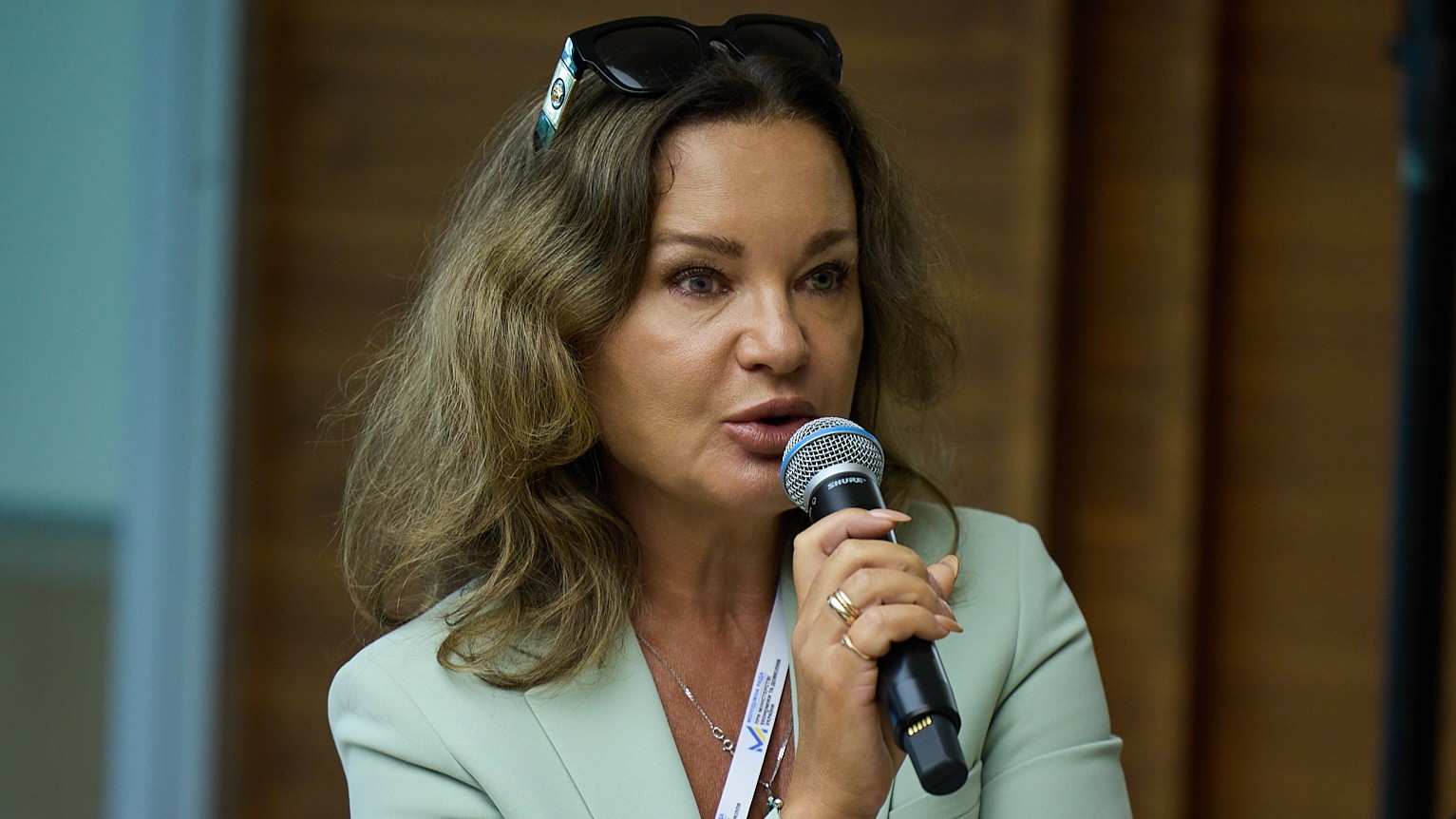
Petruk took part in the panel discussion “Development in Ukraine: Careers, Entrepreneurship and New Opportunities for Young People”. Representatives of investment, consulting and trading companies also joined the discussion.
Petruk shared Metinvest’s approach to building a complete career pathway for young people, from vocational and higher education through to their first job and subsequent career development.
She said: “This is not just about working with vocational education institutions or universities. We are building an integrated system across the Group.”
Partnering with Vocational Education Institutions
Metinvest works with more than 40 vocational education institutions in the regions where it operates. Students undertake work placements as part of their studies and can go on to careers at the Group.
In 2025, Metinvest hired almost 500 graduates of vocational education institutions, giving them their first jobs with the Group. They accounted for 13% of all new hires across Metinvest that year.
Petruk said: “Second- and third-year students can take up jobs after completing their work placements. We hired almost 500 people and created jobs for them.”
Education at Metinvest Polytechnic
The next step in the pathway is Metinvest Polytechnic. Work to establish the country’s first private technical university began before the full-scale war. Its campus was originally planned to be built in Mariupol. After Russia launched its full-scale invasion, the university moved from in-person to online teaching and admitted its first students in September 2022.
More than 1,400 people currently study at Metinvest Polytechnic. The university now offers programmes across the full higher education cycle, from undergraduate to postgraduate study. Its academic programmes have all been accredited by the National Agency for Higher Education Quality Assurance.
More than 100 students have graduated with bachelor’s degrees and more than 300 with master’s degrees. Around 30% of Metinvest Polytechnic graduates go on to build their careers at the Group after completing their studies.
The university combines academic study with real-world business challenges. Students and lecturers work together on projects based on Metinvest’s actual business needs.
Petruk said: “What sets the university apart is its close alignment with business needs. We modelled it on European universities whose graduates can move straight into industry after completing their studies. While still at university, students work on real-world projects and gain hands-on experience with modern equipment. Yes, it is demanding. But it is a unique approach that has proved effective.”
Business needs are also taken into account when academic programmes are developed. The university’s academic councils bring together academics and business representatives, who identify the skills and specialists that companies will need over the next three to five years.
Metinvest Polytechnic also works with universities elsewhere in Europe and in the US, runs student and lecturer exchanges, and hosts online lectures by leading European academics.
Bringing Young People Back to Ukraine
Metinvest is working to engage Ukrainian students studying abroad. Last year, the Group launched the Steel Force programme for students in the UK and Poland. Twenty-eight young people worked with Metinvest mentors on real projects in finance, investment, engineering, sales, HR and other areas.
After presenting their projects, they completed paid internships with Metinvest in Ukraine or elsewhere in Europe, including a visit to one of the Group’s European sites. Some of the students went on to work for Metinvest after completing their internships.
This year, the programme was expanded to Italy, Romania and Bulgaria. Around 300 students applied and 53 were selected to take part.
Petruk said: “I believe that young people should consider it an honour to return to Ukraine, contribute to its reconstruction and work to make our country a better place.”
Adaptation and Retraining
The pathway continues after young professionals join Metinvest. They receive structured onboarding and on-the-job mentoring. They can also take part in the Group’s youth network and receive financial support during their first year of employment.
Metinvest also retrains employees on site. In response to staffing needs, the Group has shortened the duration of these programmes: whereas training previously took nine to twelve months, programmes now take just three to five months.
Petruk said: “There were once queues of applicants for jobs at Metinvest. Today, we take on anyone who is willing to work and train them on site.”
This approach to recruitment, development and training employees reflects the Group’s people-centred philosophy: designing business processes around the needs of its workforce. Production takes into account not only available resources and raw materials, but also the workforce available to process them.
She added: “For us, being people-centred is not just about support programmes. Designing processes around people is our reality.”