
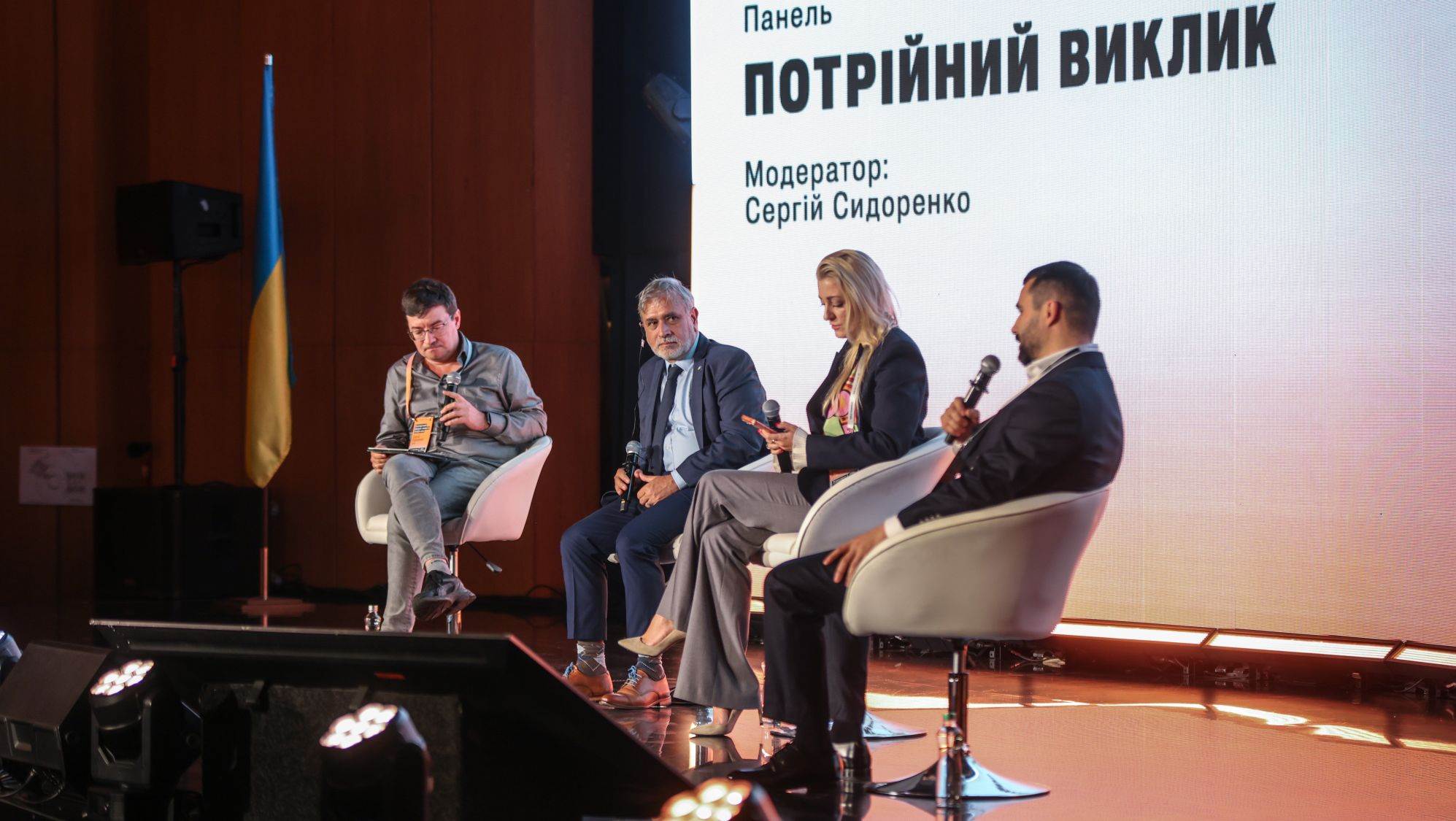
Organised by Ekonomichna Pravda, the event brought together representatives of the European Union, exporters and government officials to discuss ways of exporting products amid a perfect storm, opportunities for government support for exporters, and the prospects of the EU lifting trade restrictions on Ukrainian producers.
Oleksandr Vodoviz took part in a panel discussion entitled “The Triple Challenge”. Representatives of the EU and Ukrainian government also participated in the discussion.
The head of the Metinvest CEO’s Office noted that Ukraine’s steel industry is in an extremely difficult position. One of the main challenges is the extensive destruction of industrial facilities as a result of Russian attacks. Just a few days ago, Zaporizhstal was attacked for the fifth time, with six ballistic missiles fired at the plant.
At the same time, Ukrainian steelmakers are seeking to reach an agreement with their European partners on easing trade restrictions, including the introduction of the Carbon Border Adjustment Mechanism (CBAM) and new quotas on imports of Ukrainian products. With Black Sea ports blockaded, the EU remains the only market for Ukrainian iron ore and steel products.
Oleksandr Vodoviz said: “We are trying to explain to the Europeans that an exception should be made for Ukraine. Our ports are not operating, and our enterprises are coming under attack. The only way to export anything at all, whether iron ore or rolled steel products, is through Europe. Therefore, we should not be subject to the same restrictions as everyone else.”
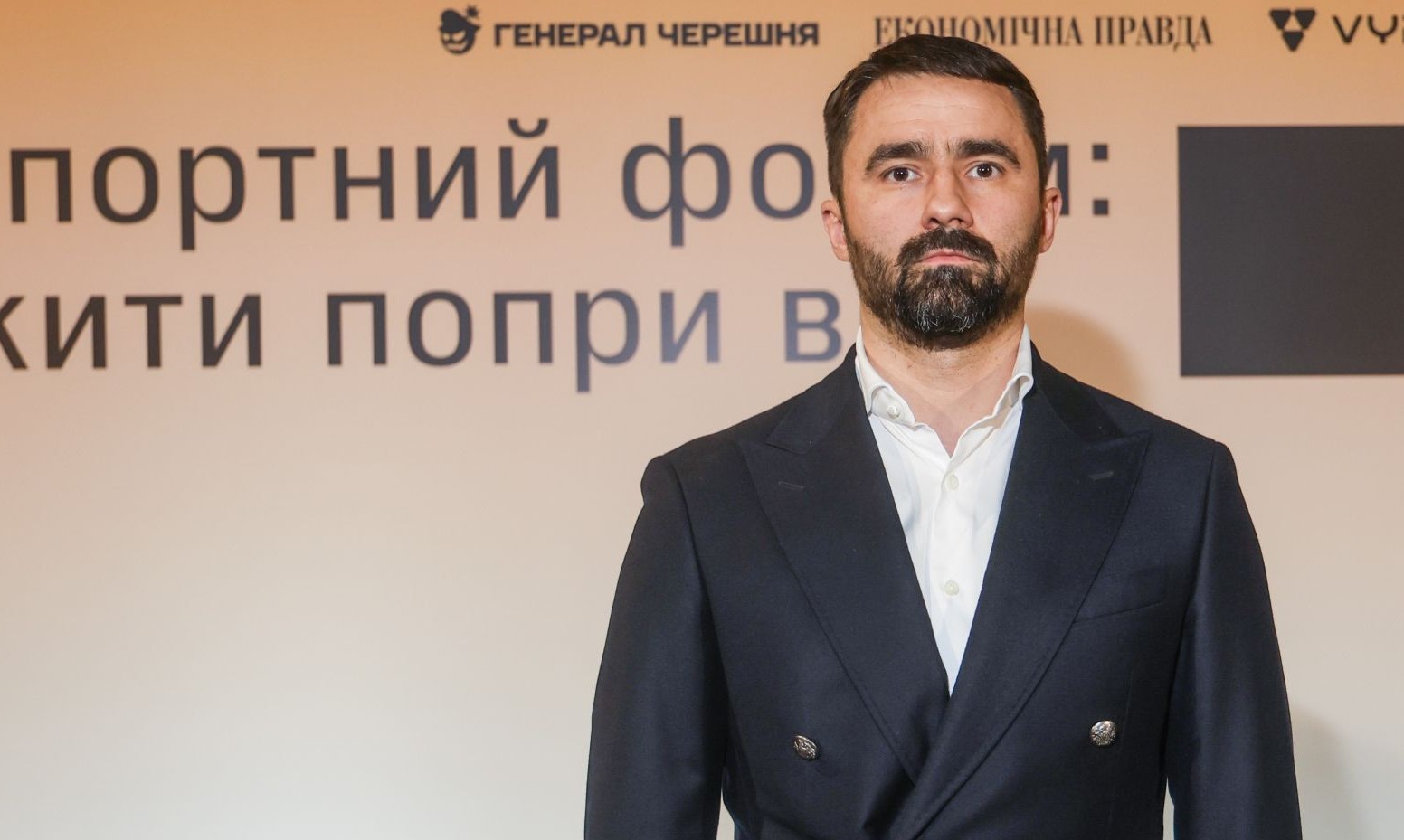
He also recalled the promises made regarding trade restrictions on Ukraine: “On 30 December, we were promised that the CBAM would not be introduced, but it was implemented on 1 January. We were promised that there would be no quotas and an exception would be made for Ukraine, but the quotas were cut by a factor of three.”
According to the head of the Metinvest CEO’s Office, when making decisions concerning Ukraine’s steel industry, the EU should take into account the circumstances in which the sector operates, Ukraine’s aspirations to join the bloc and the willingness of Ukrainian producers to comply with European requirements.
He emphasised: “Ukraine wants to join the European Union and is ready to operate under its rules. We already report our CO₂ emissions in accordance with European requirements. Therefore, it is important to take a comprehensive approach to Ukraine, bearing in mind that the country is at war and is adapting its industry to European standards. Russian attacks have already destroyed 60% of our steel production capacity. The remaining 40% poses no threat to European producers.”
Ukraine’s steel industry is facing two major challenges: rebuilding enterprises destroyed by the war and tackling the outflow of workers from cities close to the front line.
Oleksandr Vodoviz said: “We are talking about billions of dollars in damage caused by the war. The first question is: where do we find this money? The second is people. We continue to pay our employees’ salaries even though we are making losses. But people see that the plants are not operating and are leaving Zaporizhzhia, where fighting is taking place just 25 kilometres from the city. These are the two main challenges we are currently facing. We will be able to restore production if we rebuild our facilities and find people.”
The head of the Metinvest CEO’s Office identified the establishment of industrial clusters involving Ukraine and the EU as one way of attracting investment to support the recovery of Ukrainian industry: “We need to move as quickly as possible towards establishing the clusters required by the EU and work with our European partners to align our legislation.”
At the same time, European requirements to reduce CO₂ emissions impose an additional financial burden on Ukrainian producers, who need to rebuild their destroyed production capacity while also investing in decarbonisation.
Oleksandr Vodoviz emphasised: “We are not asking for preferential treatment. Between 2022 and 2025, the European Union allocated EUR9 billion to the ten largest steel companies to bring their production processes into compliance with CO₂ emissions requirements. Now the same is being demanded of us. But we first have to rebuild our facilities and then find additional funds for decarbonisation. This means we are already operating on an uneven playing field.”
The head of the Metinvest CEO’s Office also believes that EU integration should be viewed in a broader context: as an opportunity for Ukraine to attract financing, gain access to technology and operate in one of the world’s most attractive markets.
He concluded: “Businesses focus foremost on how to make money here and now. But we need to look at the bigger picture. Without the European Union, we will not have access to affordable financing, technology or the European market. At the same time, the European Commission also needs to take a comprehensive view of the situation rather than make piecemeal decisions.”